
East-West Diamond Necklaces
-
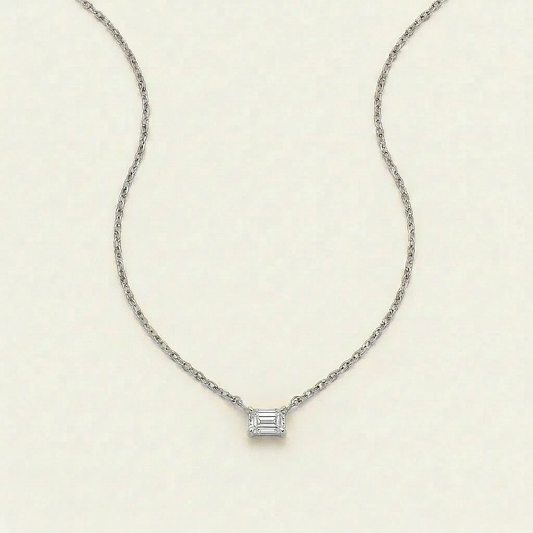
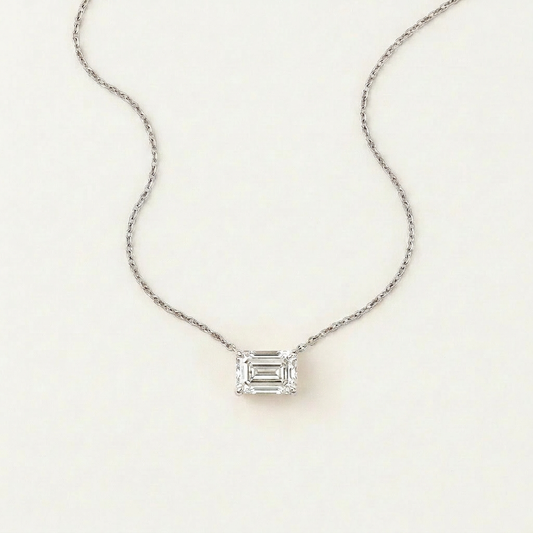
Moissanite 0.25 CT Emerald Cut East-West Necklace (V1)
Starting fromRegular price $346Sale price $346 Regular price -
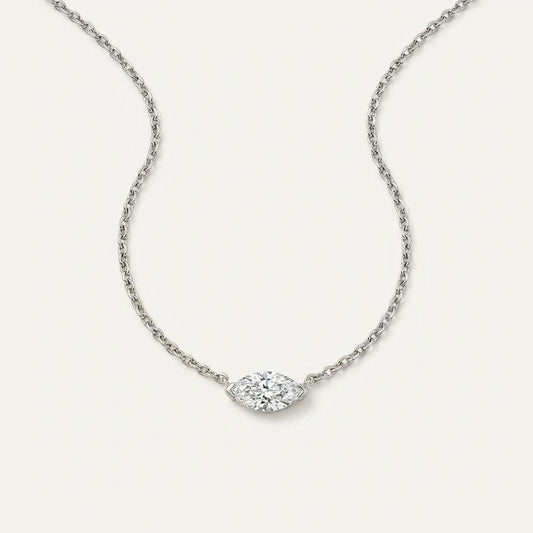
Moissanite 0.25 CT Marquise Cut East-West Necklace
Starting fromRegular price $346Sale price $346 Regular price -
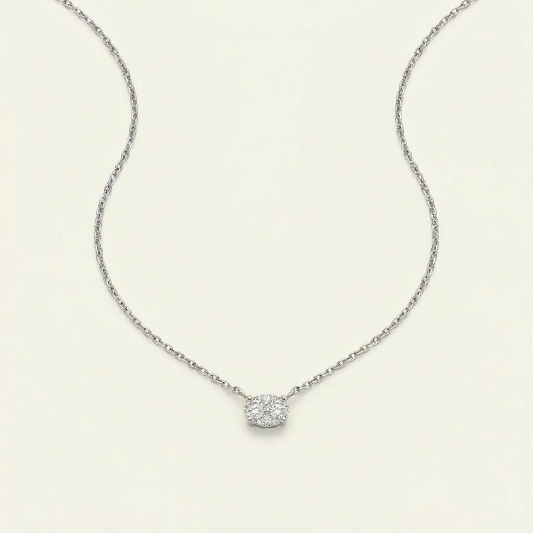
Moissanite 0.25 CT Oval Cut East-West Necklace (V1)
Starting fromRegular price $346Sale price $346 Regular price -
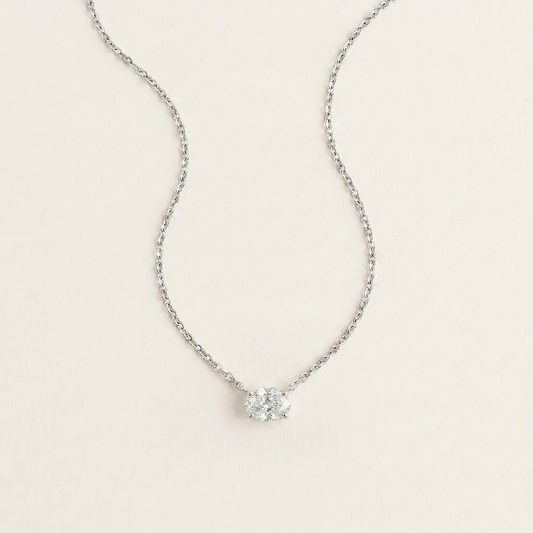
Moissanite 0.25 CT Oval Cut East-West Necklace (V2)
Starting fromRegular price $346Sale price $346 Regular price -
Moissanite 0.25 CT Emerald Cut East-West Necklace (V2)
Starting fromRegular price $346Sale price $346 Regular price





Showing 5 of 5
Most pendant necklaces orient their stones the same way, point facing down, length running vertically along the chest. The east west diamond necklace does the opposite. The stone sits horizontally across the collarbone, tips pointing left and right, creating a wide, graphic accent at the neckline that reads as modern, deliberate, and entirely distinctive. It's a styling choice that changes how an elongated stone looks at the neckline, and in moissanite, where the stone's fire is exceptional, the horizontal orientation catches light from a completely different angle than a conventional pendant. Our collection features oval, emerald cut and marquise moissanite in east-west settings across white, yellow, and rose gold.
What Is an East to West Diamond Necklace?
An east to west diamond necklace is any pendant where the stone's longest axis runs horizontally from left to right rather than vertically from top to bottom. On an elongated stone like an oval, emerald cut, or marquise, this means the stone spans the width of the chest rather than dropping down from the chain.
The visual effect is significant. Where a vertical pendant adds visual length below the neckline, a horizontal east-west pendant adds visual width, a bold, wide accent that sits flat against the chest and frames the collarbone in a way that vertical pieces do not. It's a more contemporary aesthetic than the traditional pendant, one that suits buyers who want their necklace to feel specifically modern rather than classically composed.
The bezel setting is the most common pairing for east-west pendants; the metal rim tracing the full perimeter of the stone gives the horizontal orientation a clean, intentional profile with no prongs to interrupt the stone's outline. Several styles in this collection use exactly this approach, creating a seamlessly enclosed stone that reads almost like a brushstroke across the neckline.
East West Oval Diamond Necklace
The east west oval diamond necklace is the most popular style in the collection, and it's not hard to see why. The oval's elongated body was designed to sit vertically and flatter the finger in a ring context. Turned east-west, it becomes something entirely different: a wide, horizontal accent that spans the chest generously for its carat weight, creating more visual coverage than any other stone of the same size would achieve in the same orientation.
The oval's curved sides also sit particularly naturally in a horizontal bezel setting; the metal follows the stone's elliptical outline with no awkward gaps or angles, creating a fluid, organic pendant that looks like a considered design decision rather than a repurposed vertical piece.
Two oval east-west styles are available in the collection, each with a slightly different prong or bezel configuration. Both sit at 0.25 ct, the most wearable size for a daily-wear horizontal pendant, and are available in white, yellow, and rose gold.
East West Emerald Cut Diamond Necklace
An east west emerald cut diamond necklace combines the emerald cut's architectural precision with the east-west orientation's graphic quality, and the result is one of the most sophisticated pendant styles available. The emerald cut's rectangular outline with cropped corners sits perfectly horizontally; the long parallel edges run left to right across the neckline; the step-cut facets produce long flashes of light laterally rather than straight downward; and the overall piece reads as clean, considered, and genuinely distinctive.
Where a conventional emerald cut pendant orients the stone's length vertically, the east-west orientation shows a different face of the stone entirely; the wide, flat table catches light across a larger apparent surface, and the hall-of-mirrors effect reads differently at a horizontal angle. In white gold, the cool neutral setting makes the emerald cut's glassy depth appear sharp and editorial. In yellow gold, the warmth of the metal softens the stone's hard edges and gives the pendant a more organic, characterful quality.
Two emerald cut east-west styles are available, each with a subtly different setting profile in white, yellow, and rose gold.
East West Marquise Diamond Necklace
An east west marquise diamond necklace is the most dramatic piece in the collection. The marquise's two sharp points when oriented horizontally face directly left and right, creating a wide, double-pointed accent at the neckline that's unlike anything the shape produces in its conventional vertical orientation. The stone's brilliant facets produce strong fire across the full width of the setting, and the pointed tips create a geometric tension that reads as bold without being heavy.
The marquise east-west also wears as a unisex piece; the clean horizontal geometry suits a wider range of aesthetics and personal styles than most pendant designs, and in a minimal bezel or prong setting in yellow gold, it carries a quiet confidence that appeals equally to male and female buyers. One marquise, east-west style, is available in white, yellow, and rose gold.
Why Moissanite in an East-West Setting
The east-west orientation changes how a stone's fire reads at the neckline. In a conventional vertical pendant, fire radiates primarily downward. In an east-west setting, the stone's facets face outward horizontally, catching light from angles that vertical pieces miss. Moissanite's refractive index of 2.65 (higher than diamond's 2.42) means more fire per facet, and in an east-west orientation where the stone is seen continuously at different angles as the wearer moves, that additional fire is visible and continuous throughout the day.
Every piece in this collection is set in certified moissanite, available in white, yellow, and rose gold in 14K. Each order comes with a GRA grading report and ships fully insured with a lifetime service warranty.
Metal Guide: Which Setting Suits You
White gold gives every east-west moissanite pendant its crispest, most editorial quality; the neutral, cool setting maximizes contrast and lets the stone's fire read sharply against a clean backdrop. The most popular choice for the emerald cut east-west style, where architectural precision is the aesthetic.
Yellow gold adds warmth and a more romantic, personal character, particularly effective for the oval and marquise east-west styles where the stone's organic or directional outline suits a warmer metal backdrop. 14K yellow gold is also the most durable choice for daily wear.
Rose gold creates a soft, contemporary contrast with moissanite's colorless fire. The blush tone against the horizontal stone reads as quietly personal and distinctly modern. Available across all styles in the collection.
Styling an East West Diamond Necklace
The east-west pendant's horizontal orientation makes it particularly effective with open necklines. V-necks, scoop necks, and off-the-shoulder styles all allow the stone's full horizontal span to be visible and uninterrupted. High necklines partially obscure the pendant's width, which reduces its visual impact.
For layering, an east-west pendant at 18 inches pairs naturally with a slim plain chain at 16 inches above it; the east-west stone becomes the focal midpoint of the layered look rather than competing with another pendant. Our Solitaire Diamond Necklaces carry vertically oriented pendant styles that layer naturally alongside the east-west pieces for a two-length necklace stack.
A matching moissanite stud earring in an oval or emerald cut completes the look cohesively. Our Moissanite Diamond Earrings carry stud styles in both shapes at multiple carat sizes.
FAQs
1. What is an east west diamond necklace?
A pendant where the stone's longest axis runs horizontally left to right rather than pointing downward. The orientation creates a wide, graphic accent at the neckline that reads as modern and deliberate rather than conventionally composed.
2. Which stone shapes work best in an east-west necklace?
Elongated shapes, oval, emerald cut, and marquise work best. Their horizontal span creates the most impactful east-west accent at the neckline. All three shapes are available in this collection.
3. Is an east west oval diamond necklace suitable for everyday wear?
Yes. The horizontal bezel or minimal prong setting sits flat against the chest, catches on nothing, and is comfortable for all-day daily wear. Moissanite's 9.25 Mohs hardness makes it suitable for any daily wear conditions.
4. What is the difference between a solitaire necklace and an east west necklace?
Both feature a single stone pendant, but the orientation differs. A solitaire pendant orients the stone vertically, pointing length downward. An east-west pendant orients it horizontally, width spanning the chest. The same stone creates a completely different visual effect in each format.
5. Can an east to west diamond necklace be worn by men?
Yes. The marquise and oval east-west styles are available in unisex configurations; the clean horizontal geometry suits a wide range of aesthetics and personal styles. Yellow gold in particular gives the east-west pendant a quiet confidence that works across genders.
Shop with Confidence
Every east west diamond necklace above $100 ships free worldwide, fully insured with a GRA grading report. Detailed photography shows each pendant from the front and at the neckline so you can assess how the stone's horizontal orientation sits before ordering. Our return window applies to all unworn pieces from the date of delivery, and every order includes a lifetime service warranty.