
Kite Cut Anniversary Rings
-
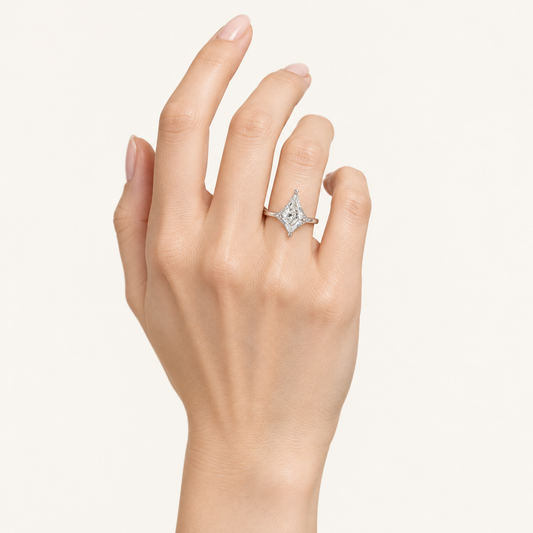
Moissanite 1.45 CT Kite Cut Solitaire Ring
Starting fromRegular price $435Sale price $435 Regular price -
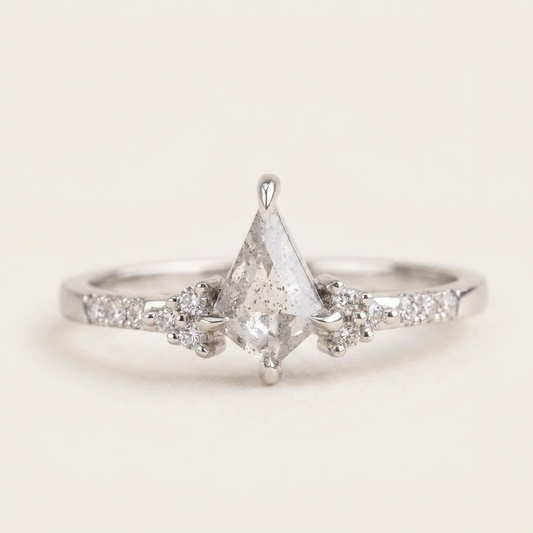
1.40 CT Kite Cut Salt and Pepper Diamond Solitaire with Side Stones Ring
Starting fromRegular price $3,918Sale price $3,918 Regular price -
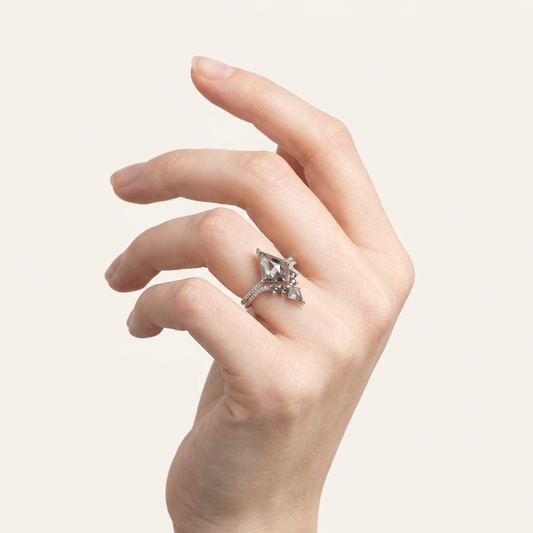
1.65 CT Kite & Round Cut Salt and Pepper Diamond Cluster Ring
Starting fromRegular price $3,275Sale price $3,275 Regular price -
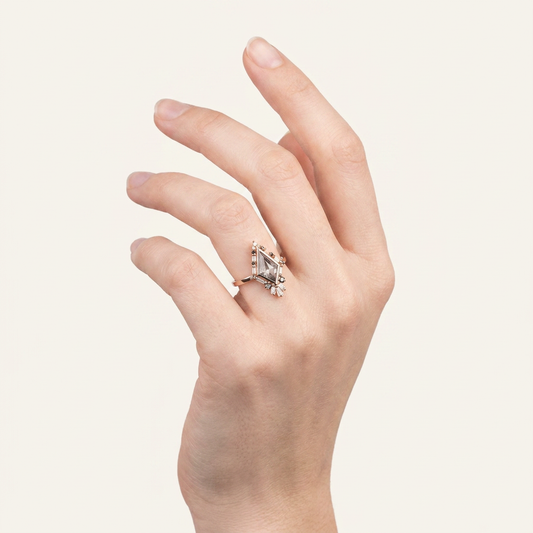
1.60 CT Kite & Round Cut Salt and Pepper Diamond Cluster Ring (V1)
Starting fromRegular price $3,190Sale price $3,190 Regular price -
1.50 CT Kite & Round Cut Salt and Pepper Diamond Cluster Ring
Starting fromRegular price $2,335Sale price $2,335 Regular price -
1.20 CT Kite & Round Cut Salt and Pepper Diamond Cluster Ring
Starting fromRegular price $2,478Sale price $2,478 Regular price




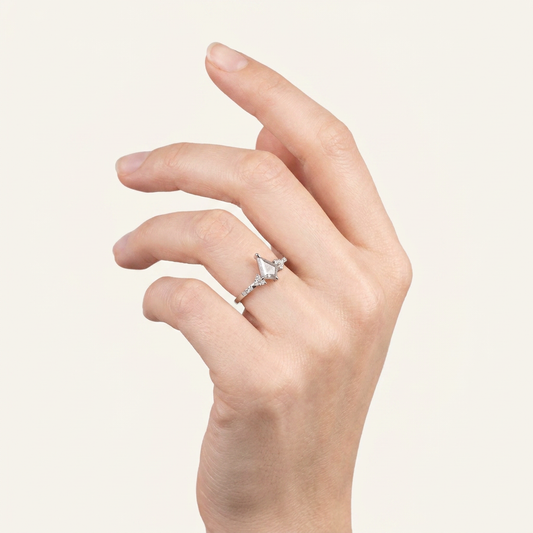
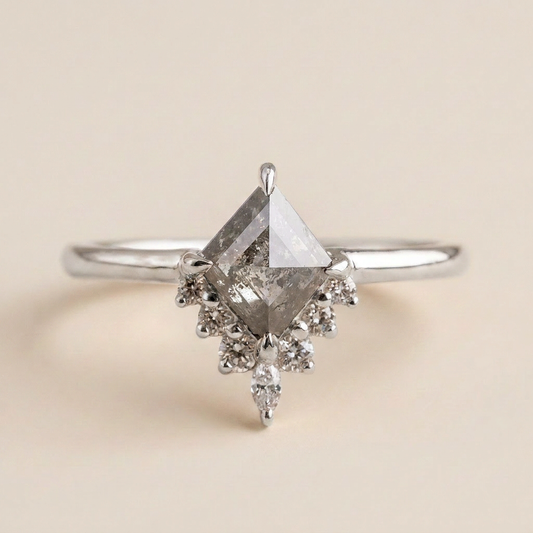
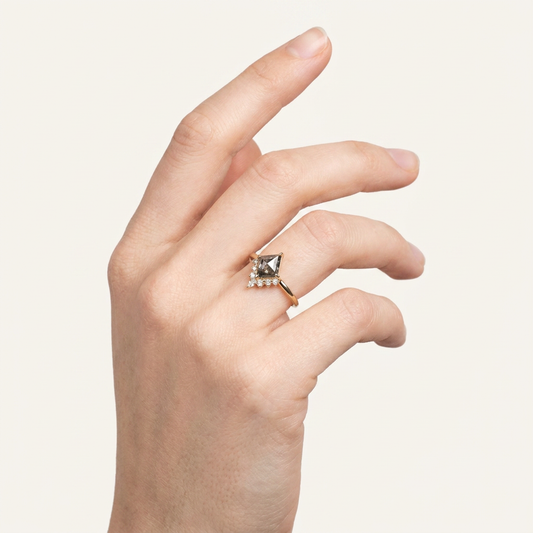
Showing 6 of 6
A kite cut anniversary ring is for the person who has never been drawn to the obvious choice. Four straight sides, two sharp points, and an angular silhouette that sits somewhere between a marquise and a traditional diamond shape but sharper, more deliberate, more architectural. The kite cut has Art Deco origins, where geometric forms dominated fine jewelry design in the 1920s and 30s. Today it's enjoying a genuine revival among buyers who want a ring that feels like modern art rather than a conventional milestone gift. If she gravitates toward clean lines, bold geometry, and pieces that make people look twice, this is the collection to start with.
What Is a Kite Cut Ring?
A kite cut ring features a center stone with four sides, two shorter sides forming a narrower upper point, and two longer sides tapering to a lower point, creating an elongated, diamond-shaped silhouette that runs vertically along the finger. The shape is a four-sided rhombus, wider in the middle, pointed at both ends, with flat or brilliant-cut facets depending on the stone.
The kite is not the same as a marquise. A marquise has curved sides and a rounded body between two pointed ends. The kite has entirely straight sides; every edge is a clean, uninterrupted line. That's what gives it its distinctly graphic, intentional quality. Where the marquise reads romantic, the kite reads architectural.
It's also a shape that flatters the finger naturally. The vertical elongation draws the eye upward, creating a slimming, lengthening effect similar to an oval or emerald cut but with a completely different aesthetic vocabulary.
Kite Cut Anniversary Ring: Setting Styles That Work
Bezel Setting
The bezel is the most natural fit for a kite cut diamond ring. A metal rim tracing the full perimeter of the stone protects every edge, including the pointed tips, which are the shape's most vulnerable points while highlighting the geometry perfectly. In a thin yellow or white gold bezel, the kite's outline reads like a piece of graphic design on the finger. It's the most modern, most wearable interpretation of this cut.
V-Prong Solitaire
A solitaire setting with V-prongs at each pointed tip elevates the stone and allows maximum light through the facets. It's the best choice for buyers who want the full brilliance of the stone visible and a more open, traditional ring aesthetic. The four-corner geometry means prong placement requires care; every tip needs dedicated protection.
Geometric Halo
A halo of smaller round diamonds tracing the kite's angular outline creates a striking contrast with curved accent diamonds surrounding a hard-edged geometric center. The combination amplifies brightness and gives the ring significant visual presence without increasing the center stone's carat weight. It suits buyers who want the kite's distinction with a more maximalist finish.
East-West Setting
Setting the kite horizontally across the fingertips pointing left and right creates a wide, sculptural effect that's among the most avant-garde orientation choices available for any ring shape. In a bezel or half-bezel setting, an east-west kite is a genuinely contemporary piece that suits buyers who want their anniversary ring to make a statement entirely its own.
Kite Cut Emerald Ring: The Most Striking Stone Pairing
A kite cut emerald ring is one of the most visually distinctive pairings in fine jewelry. The kite's straight-sided geometry frames a colored stone differently from any other setting; the angular outline creates a bold, graphic contrast with the deep green of an emerald that no curved shape replicates.
Emeralds in kite cut settings have a particular Art Deco quality; the same geometric sensibility that defined the era's jewelry is echoed in the stone's angular frame. Set in yellow gold with a bezel or thin prong setting, a kite cut emerald anniversary ring reads as a collector's piece rather than a conventional gift. It's for the woman whose taste is genuinely individual.
Other colored stone options worth considering: alexandrite and sapphire translate beautifully to kite cut settings, alexandrite for its color-change effect within the geometric frame and sapphire for depth and richness that the kite's straight edges define crisply.
Kite Cut Diamond Ring: Stone Type Options
Salt and Pepper Diamond
Salt and pepper diamonds are a particularly natural match for the kite cut; the natural inclusions and the geometric shape share the same organic-meets-architectural quality. A salt and pepper kite in a bezel setting is among the most distinctive anniversary rings we carry. Each stone is unique by definition, making it a fitting choice for a ring that marks years of shared, unrepeatable experience. Browse our Salt and Pepper Diamond Anniversary Rings for additional reference.
Moissanite
A kite cut diamond ring in moissanite delivers exceptional fire within a distinctive geometric frame. The high refractive index combined with the kite's angular facets creates a ring that catches light sharply from every direction. For buyers who want maximum brilliance in an unconventional shape, moissanite is a compelling choice at a significantly lower price point than a custom-cut diamond.
Protecting the Points: What Every Kite Cut Buyer Should Know
The kite cut's two pointed tips are its most vulnerable areas; both the upper and lower points can chip if not protected by the setting. Unlike softer-edged shapes where a standard prong works, a kite cut requires deliberate point protection.
V-prongs or claw prongs at both tips are the most effective solution for open settings. A full bezel wrapping the perimeter is the most protective option and also the most contemporary in aesthetic. In a halo setting, the surrounding accent stones add structural protection around the tips as well.
Every kite cut ring in our collection is set with dedicated tip protection as standard. If you are considering a custom design, our team can advise on the right setting approach for your chosen stone size and metal.
If the kite's architectural lines appeal to you but you'd rather see them in a wedding band, our hexagon diamond necklaces collection shows a related angular shape in necklace form and our halo anniversary rings collection is worth a look if you want the kite's geometry paired with a fuller, more maximalist halo.
FAQs
1. What is a kite cut ring?
A ring featuring a four-sided geometric stone with two pointed ends, wider in the middle, tapering to sharp points at top and bottom. The kite has entirely straight sides, which distinguishes it from the marquise's curved outline. It has Art Deco origins and is considered a specialty or custom cut.
2. What is the difference between a kite cut and a marquise cut?
A marquise has curved sides and a rounded body between two pointed ends. A kite has entirely straight sides; every edge is a flat, angular line. The kite reads more geometric and architectural; the marquise reads more fluid and romantic.
3. Are kite cut diamond rings suitable for everyday wear?
Yes, with the right setting. The pointed tips are the most vulnerable areas. A bezel or V-prong setting protects them effectively for daily wear without affecting the ring's overall appearance.
4. What makes a kite cut emerald ring so distinctive?
The kite's straight-sided geometry creates a bold, graphic frame for a colored stone that no curved shape replicates. Against a deep green emerald, the angular outline has a strong Art Deco quality, graphic, collected, and entirely individual.
5. Is a kite cut ring a good anniversary gift?
Yes. The relative rarity of the shape, its custom-cut nature, and its geometric individuality make it a particularly meaningful anniversary piece, something that looks considered and personal rather than chosen off a standard menu.
Shop with Confidence
Every kite cut anniversary ring of above $100 ships free worldwide, fully insured with a certified grading report. Detailed photography shows the stone from multiple angles, which is particularly important for a geometric shape where the angular outline and tip symmetry are visible in the face-up view. Our return window applies to all unworn rings from the date of delivery, and every order includes a lifetime service warranty.