
Oval Cut Engagement Rings
-
Moissanite 1.50 CT Oval Cut Solitaire Ring
Starting fromRegular price $567Sale price $567 Regular price -
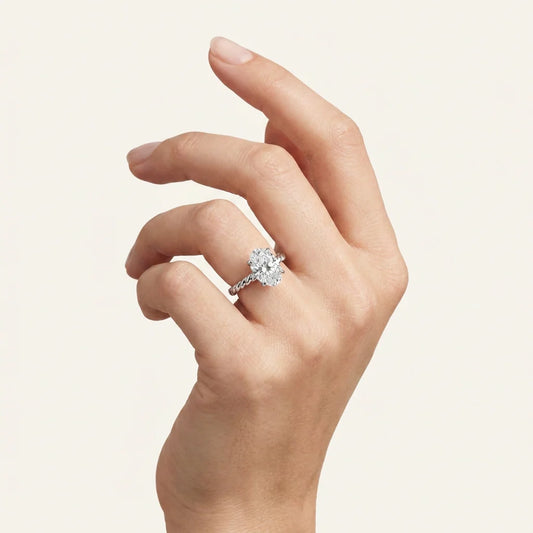
Moissanite 3.30 CT Oval Cut Solitaire Ring
Starting fromRegular price $564Sale price $564 Regular price -
Moissanite 3.35 CT Oval & Round Cut Solitaire Ring
Starting fromRegular price $851Sale price $851 Regular price -
Moissanite 3.40 CT Oval Cut Solitaire Ring
Starting fromRegular price $439Sale price $439 Regular price -
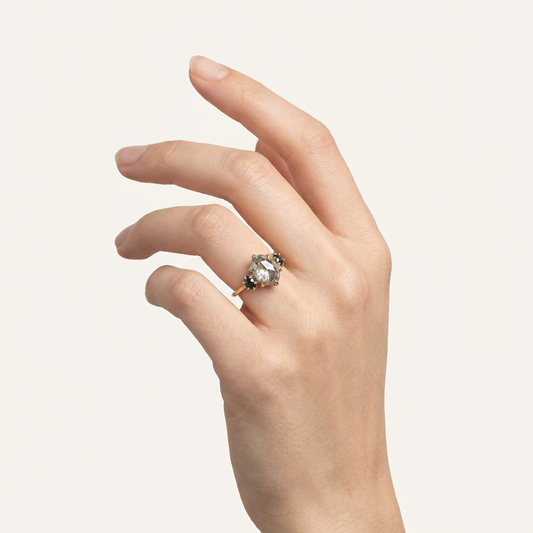
1.80 CT Oval & Triangle Cut Salt and Pepper Diamond Three Stone Ring
Starting fromRegular price $3,533Sale price $3,533 Regular price -
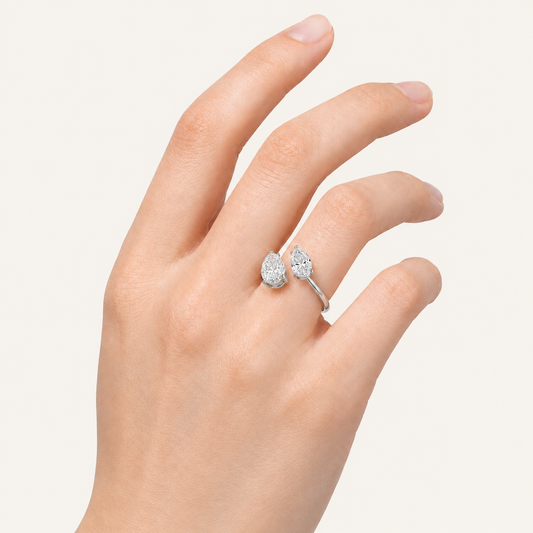
Lab Grown Diamond 3.00 CT Oval & Pear Cut Toi Et Moi Ring
Starting fromRegular price $5,392Sale price $5,392 Regular price -
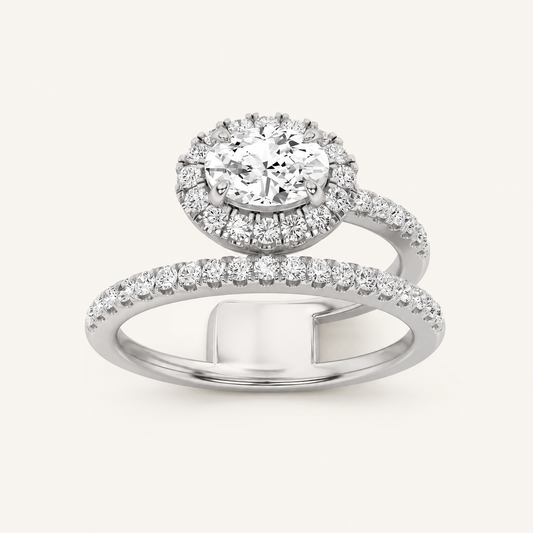
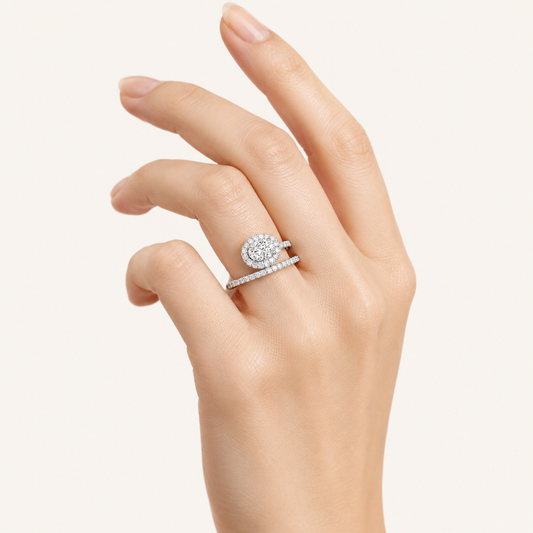
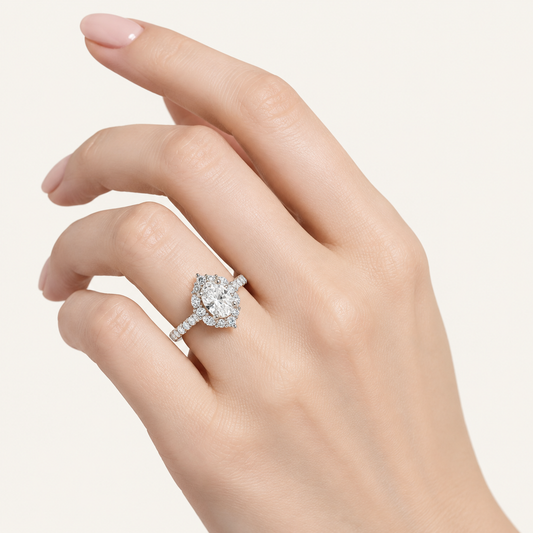
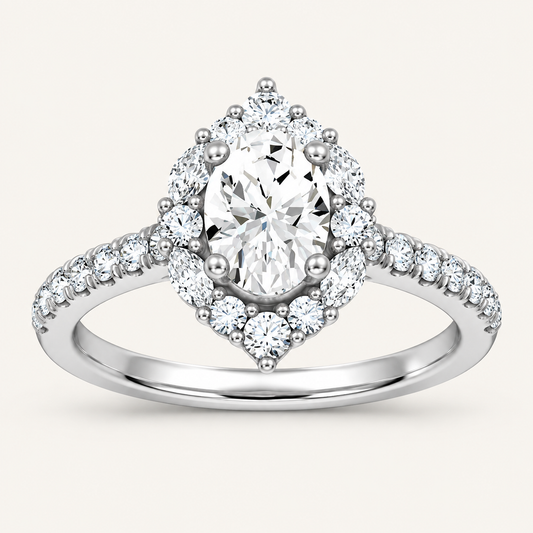
Lab Grown Diamond 1.00 CT Oval Cut Halo Ring
Starting fromRegular price $3,973Sale price $3,973 Regular price -
Lab Grown Diamond 1.40 CT Oval Cut Halo Ring
Starting fromRegular price $2,270Sale price $2,270 Regular price -
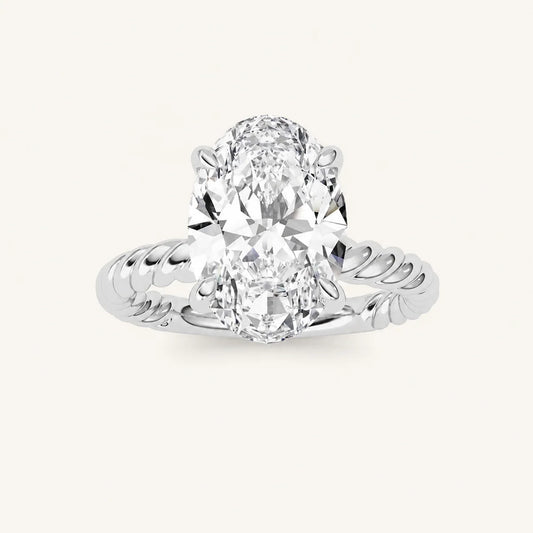
Lab Grown Diamond 3 CT Oval Cut Solitaire Ring
Starting fromRegular price $5,250Sale price $5,250 Regular price -
Moissanite 2.00 CT Oval Cut Hidden Halo Ring
Starting fromRegular price $531Sale price $531 Regular price -
Moissanite 3.00 CT Oval Cut Solitaire Ring
Starting fromRegular price $579Sale price $579 Regular price -
Lab Grown 1.40 CT Oval & Marquise Cut Diamond Solitaire with Side Stones Ring
Starting fromRegular price $1,461Sale price $1,461 Regular price -
Lab Grown 2.50 CT Oval Cut Diamond Hidden Halo Ring
Starting fromRegular price $2,326Sale price $2,326 Regular price -
Lab Grown 2.00 CT Oval Cut Diamond Petite Solitaire Ring
Starting fromRegular price $1,603Sale price $1,603 Regular price -
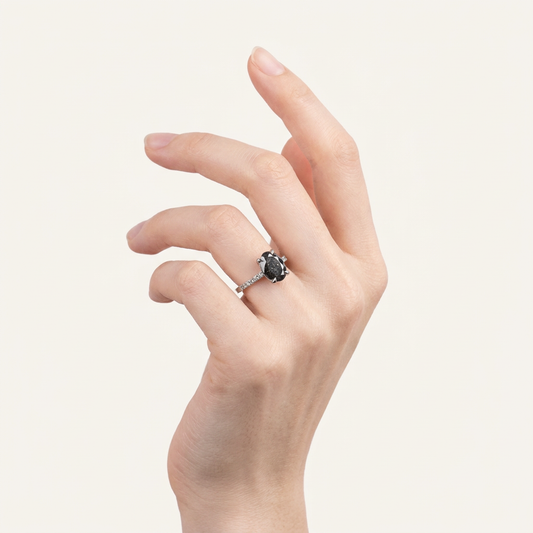
2.30 CT Oval Cut Salt and Pepper Diamond Solitaire Ring
Starting fromRegular price $4,307Sale price $4,307 Regular price -
2.00 CT Oval Cut Salt and Pepper Diamond Three Stone Ring
Starting fromRegular price $3,785Sale price $3,785 Regular price -
Moissanite 3.00 CT Emerald & Oval Cut Toi Et Moi Ring
Starting fromRegular price $836Sale price $836 Regular price -
Lab Grown 1.50 CT Oval & Pear Cut Diamond Toi Et Moi Ring
Starting fromRegular price $1,532Sale price $1,532 Regular price -
Moissanite 3.60 CT Oval Cut Three Stone Ring
Starting fromRegular price $694Sale price $694 Regular price -
Moissanite 2.00 CT Oval & Pear Cut Three Stone Ring
Starting fromRegular price $538Sale price $538 Regular price







Showing 20 of 75
Find your oval cut engagement ring in moissanite, lab-grown diamond, or salt-and-pepper diamond. Choose a simple solitaire to highlight the center stone, a halo for a more detailed outline, or side stones for added contrast.
Prefer a fuller oval or a longer, slender shape? Explore the designs below and compare stone dimensions, settings, and available metals to find your preferred combination.
Find Your Oval Engagement Ring Style
An oval’s curved outline works with both understated and detailed settings. Start with the look you enjoy, then compare the ring’s side profile, band width, and stone placement.
1. Oval Solitaire Engagement Rings
An oval solitaire engagement ring keeps attention on the center stone. Without a surrounding halo or prominent side stones, the oval’s outline and appearance become the main features.
Explore our solitaire engagement rings and compare oval designs for differences in prong placement, band width, and setting height.
2. Oval Engagement Rings with Side Stones
Oval engagement rings with side stones add detail around the center stone. Smaller accents can keep the oval prominent, while a three-stone arrangement creates a broader composition across the finger.
Compare the side stones’ shapes, dimensions, and placement alongside the oval center. Check their material and whether the advertised total carat weight includes these accents.
Oval Halo Engagement Rings
A halo surrounds the center stone with smaller accent stones, creating a more detailed outline and a larger overall face-up appearance.
Browse our halo engagement rings to explore available designs. Check each listing for the center-stone dimensions, accent-stone material, and total carat weight.
3. Hidden Halo Oval Engagement Rings
A hidden halo places accent stones beneath the center stone, adding detail that is most visible from the side or at an angle. It can suit someone who enjoys a relatively simple top view with additional sparkle around the setting.
Compare side-profile photographs to see where the accents sit and how high the center stone rises above the band.
4. Three-Stone Oval Engagement Rings
A three-stone setting frames the oval center with a stone on either side. The shapes, proportions, and arrangement of those side stones influence whether the ring looks balanced, elongated, or more geometric.
Explore our three-stone engagement rings and check the specifications of each oval design.
Choose Your Center Stone
This collection includes different stone materials, each with its own appearance and buying considerations.
Lab-Grown Oval Diamond Engagement Rings
Lab-grown diamonds are diamonds grown in a laboratory rather than formed in the earth . When comparing individual stones, review their dimensions, color, clarity, appearance, and available grading documentation.
Explore our lab-grown diamond engagement rings to compare additional designs.
Oval Moissanite Engagement Rings
Moissanite is a separate gemstone from diamond, known for its bright appearance and colorful flashes of light. It offers another option for shoppers comparing center-stone materials and budgets.
Check measurements in millimeters and confirm how the listed size is expressed, particularly where diamond-equivalent weight is used. Browse our moissanite engagement rings for more options.
Salt-and-Pepper Oval Diamond Engagement Rings
Salt-and-pepper diamonds feature visible inclusions that give each stone an individual pattern. Some appear lightly speckled, while others have a denser gray or smoky look.
Look closely at the stone’s pattern and transparency, and ask about any durability concerns. Explore our salt-and-pepper diamond engagement rings if you are drawn to visibly included diamonds.
How to Choose an Oval Cut Engagement Ring
-
Compare Length, Width, and Proportions
Carat weight alone does not tell you how large or elongated an oval will look. Check its length and width in millimeters.
The length-to-width ratio is calculated by dividing length by width. For example, a hypothetical stone measuring 9 × 6 mm has a ratio of 1.50. A lower ratio creates a fuller outline; a higher ratio creates a longer, narrower one.
Choose the proportions you prefer, then assess the individual stone’s appearance. A ratio alone does not establish its quality.
-
Assess Bow-Tie Appearance
Oval diamonds can show a dark area across the center known as the bow-tie effect. Its visibility varies with faceting, lighting, and viewing angle.
Watch a video of the stone, if available and watch how brightness and contrast change as the diamond moves. A grading report and measurements provide useful information, but they do not replace looking at the stone itself.
-
Choosing a Larger Oval Engagement Ring
For a larger oval engagement ring, compare the center stone’s length and width alongside its carat weight. These measurements help you judge its presence on your hand, while setting height and band width influence the ring’s overall proportions.
Check whether the advertised weight refers to the center stone or the total weight of the center and side stones. Use on-hand photographs to compare your preferred sizes.
To explore larger sizes across different shapes, browse our 2–3 carat engagement rings and 3–4 carat engagement rings.
-
Consider Metal and Setting Height
Review the metal colors and purities offered on your chosen listing. Compare their appearance alongside the center stone, as well as any care requirements.
Setting height also matters. Look at the side profile and consider how the ring may work with your daily activities and preferred wedding band.
Pair Your Oval Engagement Ring with a Wedding Band
The fit between an oval engagement ring and a wedding band depends on both designs. The center setting, basket, band width, and clearance all influence whether the rings sit closely together.
A straight band may work with some settings, while others suit a curved or contoured design. A small gap can also be an intentional styling choice.
Browse our wedding bands and confirm compatibility with your chosen engagement ring before ordering.
Order with Confidence
Before purchasing, confirm your ring size, center-stone specifications, available documentation, and expected delivery date.
Use our ring size guide and review the resizing policy to understand your options. For a proposal deadline, contact us before ordering and check our shipping information.
Read the return and exchange policy and lifetime service warranty for eligibility, exclusions, and service terms.