

Lab Grown Diamond Engagement Rings Under $2,000: What You Can Actually Get
Spending $2,000 on an engagement ring shouldn’t leave you wondering if you’ve compromised too much. With a lab-grown diamond, that budget can get you a ring that feels genuinely special not like a smaller version of the ring you really wanted.
In 2026, shoppers can realistically look at around 1.2 to 1.8 carats, depending on the diamond’s shape, cut, color, clarity and setting. Lab-grown diamonds currently cost around 50–80% less than comparable natural diamonds, giving you more room to spend on the center stone. They also have the same chemical composition, crystal structure, hardness and optical properties as natural diamonds.
For a $2,000 ring, a practical target is a 1.2–1.8ct IGI-certified diamond in G–H color and VS2 clarity, paired with a simple 14K gold setting. Round brilliant gives you classic sparkle, while oval, pear and marquise shapes can create more visual size for your money. A simple solitaire or bezel also keeps more of your budget focused on what matters most: the center stone.
Here is exactly what $2,000 gets you in a lab-grown diamond engagement ring in 2026, and how to make every single dollar work for you.
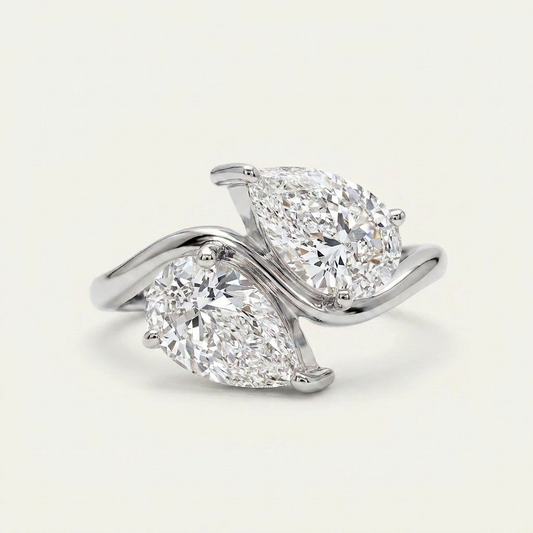
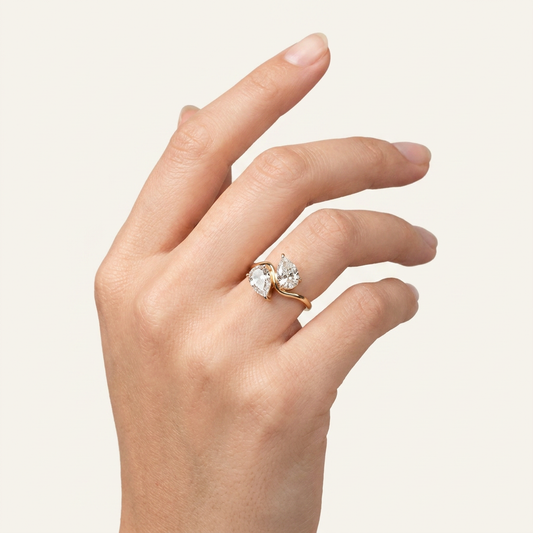
Lab Grown 4.00 CT Pear Cut Diamond Toi Et Moi Ring
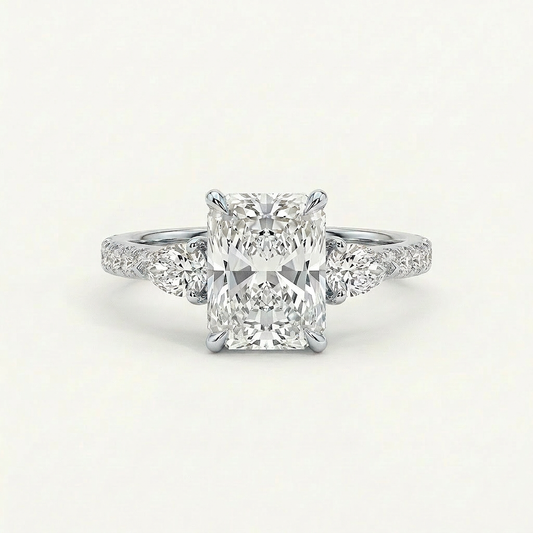
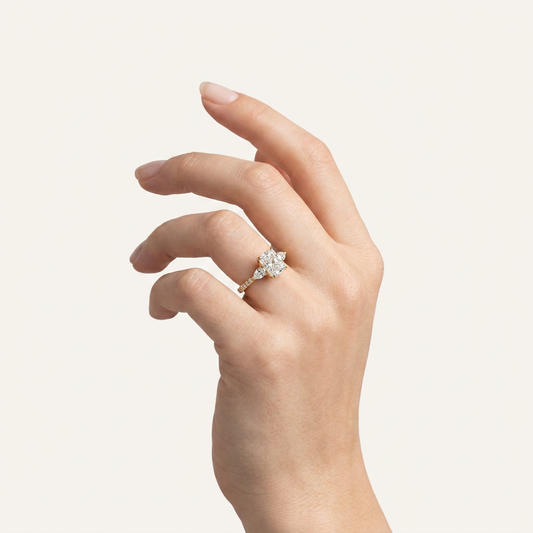
Lab Grown 3.00 CT Radiant & Pear Cut Diamond Three Stone Ring
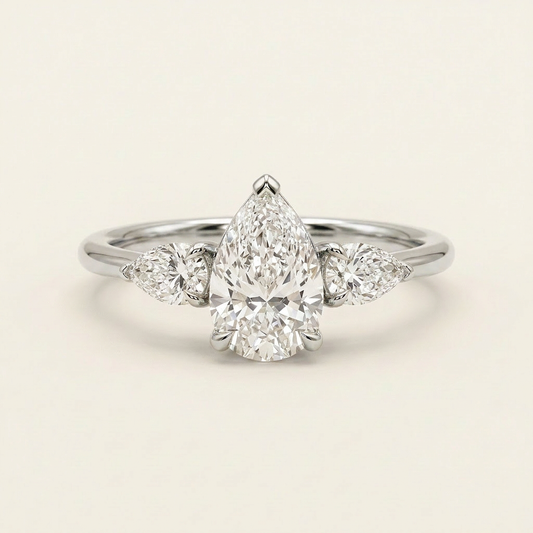
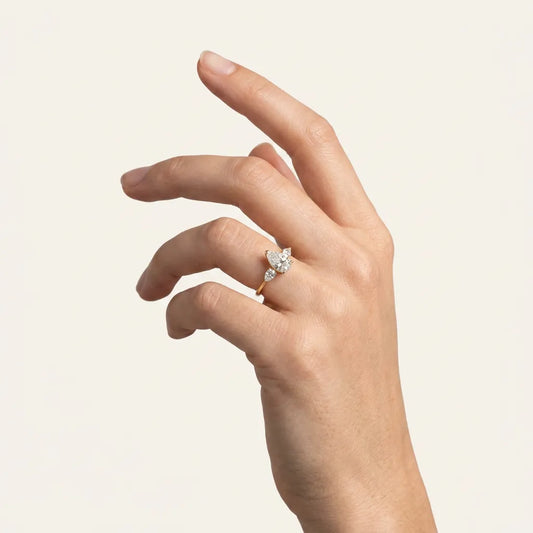
Lab Grown 1.50 CT Pear Cut Diamond Three Stone Ring
Explore Lab Grown Diamond Engagement Rings
What Does $2,000 Actually Buy? A Realistic Breakdown
Let us stop talking in generalities and look at real numbers. Here is what you can realistically expect at different price points within the $2,000 budget when buying a complete lab grown diamond engagement ring center stone plus setting.
Budget Tier 1: Under $1,000
At this price point you are working with smaller center stones roughly 0.5 to 0.8 carats but that does not mean underwhelming. With a lab grown diamond at this size, you can still get:
-
Excellent or Very Good cut grade (this is where brilliance comes from do not compromise here)
-
G–H color eye-clean, white-looking diamonds without paying for colorless premium
-
VS2 or SI1 clarity no visible inclusions to the naked eye
-
A handcrafted solitaire with different shapes in 10k or 14k gold.

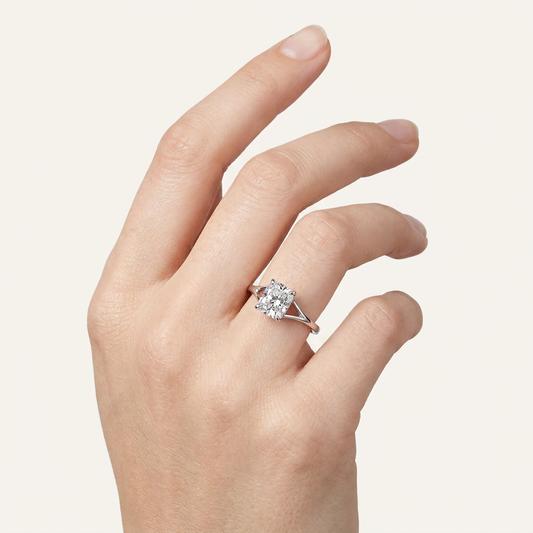
Lab Grown 1.00 CT Cushion Cut Diamond Solitaire Ring
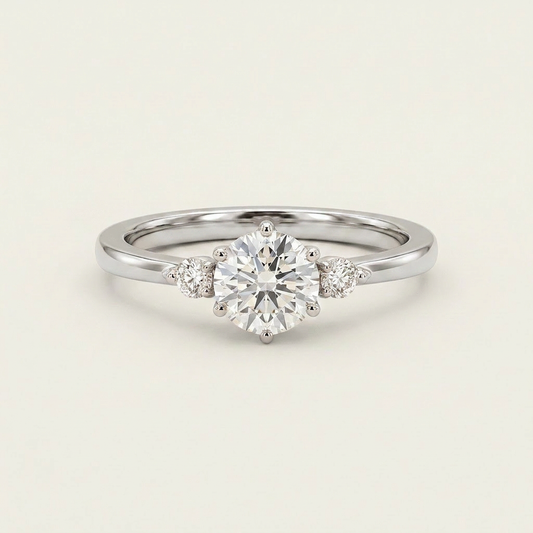
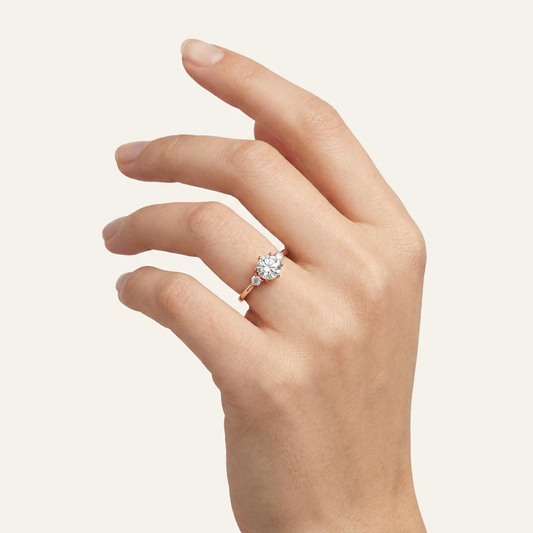
Lab Grown 0.80 CT Round Cut Diamond Three Stone Ring
Who it suits: budget-conscious buyers, minimalist styles, smaller hand sizes where a 0.6 ct looks proportionally ideal or couples saving the rest for a wedding band.
Budget Tier 2: $1,000 – $1,500
This is a strong sweet spot for lab grown diamonds. You are looking at:
-
1.0 to 1.3 carat center stone with excellent cut
-
F–H color, VS1–VS2 clarity genuinely beautiful grades
-
Strong variety in shapes: round, oval, pear, emerald, cushion, marquise all become accessible
-
More setting options: three-stone, halo, cluster designs in the range
Lab Grown 3.00 CT Cushion & Trillion Cut Diamond Three Stone Ring
Lab Grown 1.50 CT Pear Cut Diamond Three Stone Ring
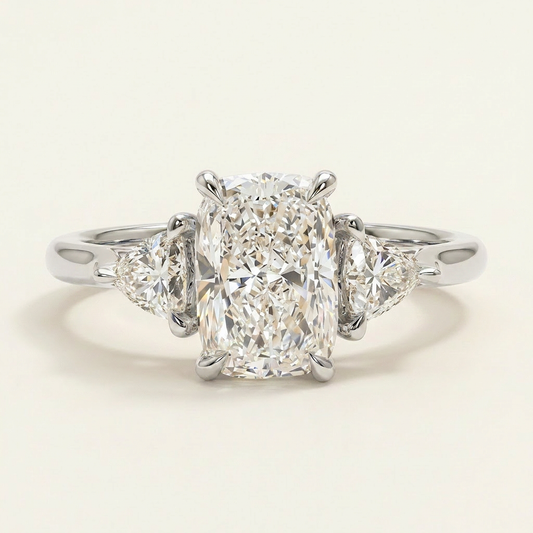

A 1.0 carat well-cut lab grown diamond in a white gold or yellow gold solitaire sits comfortably in this range and looks exactly like what it is a real diamond engagement ring.
Budget Tier 3: $1,500 – $2,000
At this range you are buying a notably impressive ring. Expect:
-
1.3 to 1.8 carat center stone, excellent cut
-
E–G color, VS1 clarity or better
-
Premium shapes like pear, oval or emerald cut elongated shapes look significantly larger than their carat weight
-
Elaborate settings: halo with pave band, three-stone with trillion side stones, or custom-style designs
-
IGI-certified stones with full grading documentation
Lab Grown 4.00 CT Pear Cut Diamond Toi Et Moi Ring
Lab Grown 1.50 CT Emerald Cut Diamond Solitaire Ring (V-Artdeco)
$0
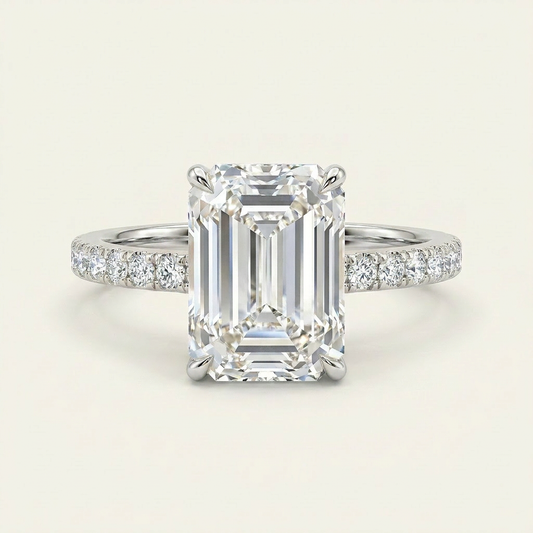
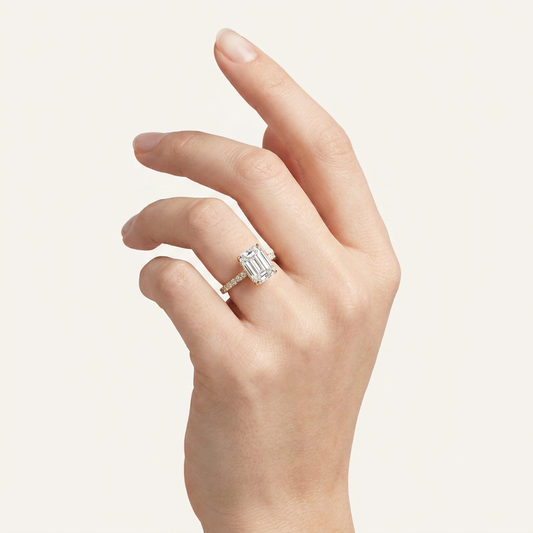
At the $1,800 to $2,000 mark, a well-cut 1.5 to 1.7 carat pear or oval lab grown diamond in a halo setting is a ring most people would assume cost three to four times more. Not because it is a trick because it is a genuinely fine piece of jewelry.
Why Lab Grown Diamonds Change What $2,000 Can Buy
A natural diamond engagement ring with a 1 carat center stone, decent cut, and VS clarity will run you anywhere from $4,000 to $7,000 at retail. That same money in lab grown buys you a 1.5 to 2 carat stone with better grades and a handcrafted setting.
That is not a knock on natural diamonds. It is just math. Lab grown diamonds are chemically identical to mined diamonds (10 Mohs), same brilliance, same IGI or GIA certification but they cost 50 to 80 percent less because they are grown in weeks instead of mined over decades.
For buyers with a $2,000 budget, that price difference is the whole game.
In practical terms: $2,000 on a natural diamond gets you roughly 0.5 to 0.7 carats with mid-range quality. The same $2,000 on a lab grown diamond gets you 1.2 to 2 carats with excellent cut quality. The ring looks completely different on the hand.
|
Budget |
Natural Diamond |
Lab Grown Diamond |
|---|---|---|
|
$1,000 – $1,500 |
~0.4–0.5 ct, SI clarity |
~0.8–1.2 ct, VS clarity |
|
$1,500 – $2,000 |
~0.5–0.7 ct, SI-VS clarity |
~1.2–1.8 ct, VS–VVS clarity |
|
$2,000 – $2,500 |
~0.7–0.9 ct, VS clarity |
~1.8–2.5 ct, VS clarity |
Note: Estimates based on 2026 average market pricing for excellent cut, G–H color. Actual prices vary by cut quality, shape and seller.
How to Maximize Your $2,000 Budget: Four Choices That Matter
Your $2,000 goes further with the right decisions in four areas. Here is how to think through each one.
1. Prioritize Cut Above Everything Else
Cut is the single most important factor in how a diamond looks. A well-cut 1.2 carat diamond out sparkles a poorly-cut 1.8 carat in the same room. Brilliance, fire and scintillation all of it comes from cut quality, not carat weight.
When working within a budget, cut is the last thing to compromise on. Carat, color and clarity can all be adjusted downward without a visible hit. Cut cannot.
What to look for: Excellent or Ideal cut grade (round) or Very Good (fancy shapes like oval, pear, emerald). If a jeweler is selling you on a big carat number but won't confirm cut grade walk away.
2. Choose Your Diamond Shape Strategically
Shape affects both price and visual size significantly. Here is how the main shapes compare at a $2,000 budget:
|
Shape |
Relative Price |
Visual Size Effect |
Best For |
|---|---|---|---|
|
Round |
Highest |
Standard least efficient |
Classic, traditional look |
|
Oval |
15–20% less than round |
Looks 10–15% larger than carat weight |
Long, elegant fingers; modern look |
|
Pear |
15–25% less than round |
Very elongated maximizes visual size |
Feminine, distinctive, romantic |
|
Marquise |
20–30% less than round |
Longest visual projection looks biggest |
Unique, bold, vintage-inspired |
|
Emerald |
20–30% less than round |
Wide face-up but step-cut = less sparkle |
Clean-lined, architectural look |
|
Cushion |
15–20% less than round |
Slightly smaller face-up than oval |
Vintage romance, soft edges |
|
Radiant |
15–20% less than round |
Brilliant cut lots of sparkle |
Hybrid of cushion and emerald |
Practical takeaway: if budget is a priority and you want visual size, oval, pear or marquise cut lab grown diamonds give you the most diamond presence per dollar. A 1.5 carat pear or oval looks substantially larger on the hand than a 1.5 carat round.
3. Do Not Overpay for Color or Clarity
Color and clarity grades are often where jewelers upsell. Here is the honest truth about where the visible difference actually stops:
Color: D–F is colorless. G–H is near-colorless. In a white or yellow gold setting, a G or H color lab grown diamond looks white to the naked eye. You will not see the difference from D unless you are comparing stones side by side under lab lighting. Save the premium.
Clarity: VS2 or SI1 is eye-clean in almost every case. That means no inclusions visible without magnification. Flawless and VVS grades are priced for collectors and gemologists, not for someone wearing the ring at brunch. For a $2,000 budget, VS2 gives you a clean stone and keeps money in your pocket.
The sweet spot: G–H color + VS2–SI1 clarity + Excellent cut. That combination at the carat weight your budget allows will always outperform a smaller D Flawless stone with a mediocre cut.
4. Factor the Setting Into Your Budget
The center stone is not the whole ring. A setting adds cost typically $300 to $800 depending on complexity and it is part of what makes the ring look finished and fine.
Here is how to think about setting allocation at different total budgets:
|
Total Budget |
Stone Budget |
Setting Budget |
What to Expect |
|---|---|---|---|
|
$1,200 |
$700–800 |
$300–400 |
Solitaire in 14k gold, simple prong or bezel |
|
$1,500 |
$900–1,100 |
$350–500 |
Solitaire or simple three-stone in 14k or 18k gold |
|
$2,000 |
$1,200–1,500 |
$450–700 |
Halo, three-stone, or pave band in 14k or 18k gold |
At IBIZ Jewel, every ring is handcrafted in our own workshop, which means you pay the workshop price rather than a retail markup. That difference typically lets you allocate more budget toward the stone itself.
The Best Lab Grown Diamond Shapes for a $2,000 Budget
Not every diamond shape performs equally at the $2,000 price point. Here are the five shapes we see work best at this budget, and what you can realistically get in each.
Oval Cut Ring – Best for Visual Size
Oval cut is arguably the best-value diamond shape at any budget. It typically costs 15–20% less than a comparable round diamond while appearing 10–15% larger face-up, making it a flattering choice for almost every hand shape. With $1,400–$1,700, you can typically choose a 1.4–1.6 carat IGI-certified oval lab grown diamond with Excellent Cut, G color, and VS2 clarity, leaving room for a handcrafted 10K or 14K gold solitaire or simple pave setting.

Pear Cut Ring – Three-Prong Solitaire Setting
Pear shaped diamond rings look dramatically larger than their carat weight due to the elongated silhouette. A 1.3 carat pear visually reads as closer to 1.7 carat from across the table. They carry a vintage-romantic feel that is very much in style right now and they photograph exceptionally well. At $2,000, you can get a 1.3 to 1.5 carat pear lab grown diamond with a delicate halo or simple four-prong east-west setting.

Emerald Cut Solitaire Ring – Classic Four-Prong Setting
Emerald cuts are step-cut rather than brilliant-cut, which means they showcase clarity and the natural character of the stone rather than maximizing sparkle. They have a very cool, architectural look that is polarizing in the best way people either love them or do not, and those who love them tend to love them for life. At $2,000, a 1.3 to 1.6 carat emerald cut lab grown in a simple solitaire or thin pave band looks exceptionally refined.

Round Brilliant – Most Classic, Lower Carat at This Budget
Round brilliant is the most in-demand shape and the most expensive per carat. At $2,000 total, a round lab grown diamond center stone will typically land in the 0.9 to 1.2 carat range with good grades. That is still a beautiful ring but if carat size matters to you, other shapes give you more. If you want the classic look and nothing else, round is the right choice.

Marquise Cut – Best for Maximum Carat Presence
Marquise cut ring is the least expensive shape per carat and the most elongated. A 1.5 carat marquise looks enormous on the hand because of its long-to-wide ratio. It is a bold, distinctive shape not for everyone but if you want the biggest-looking ring for the dollar, nothing beats a marquise cut lab grown diamond at this budget.

Five Questions to Ask Before You Buy
A $2,000 ring purchase deserves a few smart questions. Here are the five we recommend asking any jeweler including us before committing.
1. Does the ring come with IGI or GIA certification for the stone?
A certified stone means an independent laboratory has evaluated the cut, color, clarity and carat weight. This is your proof of what you are actually getting. At IBIZ Jewel, lab grown diamond rings come with their original IGI certificate. If a jeweler cannot provide third-party certification, that is a red flag.
2. What carat size can I get for $2,000 in lab grown?
We covered this above. Excellent or Ideal cut for rounds. Very Good minimum for fancy shapes. If this information is not readily volunteered, ask specifically. Cut grade is the most important factor in how the ring actually looks.
3. What metal and karat is the setting?
14k gold is the most durable and practical for everyday wear. 18k gold is richer in color but slightly softer. Platinum is the most durable and the most expensive. At a $2,000 total budget, 14k gold is the smart choice it performs beautifully and keeps more of the budget on the stone.
4. Is this handcrafted or mass-produced?
Mass-produced rings are sized by machine, set by machine and finished to a standard. Handcrafted rings are built for your finger, with prongs individually set and the piece checked before it ships. This matters for longevity and for the feel of the ring itself. At IBIZ Jewel, every ring is made in-house after you order, which is part of what makes workshop pricing possible.
5. What is the warranty and service policy?
Fine jewelry needs occasional maintenance, prong tightening, polishing and stone inspection. A jeweler who stands behind their work should offer ongoing service. At IBIZ Jewel, every piece comes with a lifetime service warranty: stone loose, band scratched, prong worn send it back.
What to Avoid When Buying a Lab Grown Diamond Ring Under $2,000
A few patterns we see regularly that cost buyers money or lead to disappointment:
1. Chasing carat weight at the expense of cut
A 1.8 carat poorly cut diamond looks dull next to a 1.2 carat excellent-cut stone. Every time. Cut is what generates the light return that makes a diamond sparkle. If you are picking between a bigger stone with poor cut and a smaller stone with excellent cut, take the excellent cut every single time.
2. Over-investing in color or clarity
D color and Flawless clarity are priced at a premium for collectors. In real-world wearing conditions in a restaurant, in sunlight, at a party nobody is comparing your G-VS2 stone to a D-Flawless under magnification. Spend those dollars on size and cut instead.
3. Buying an uncertified stone to save money
If a jeweler is offering a noticeably cheaper price but cannot provide IGI or GIA certification, the grade of the stone is unverified. You have no way to know what you are actually buying. The certification is the contract.
4. Ignoring resale expectations
Lab grown diamonds are not investments. Neither, honestly, are natural diamonds for most buyers retail markup ensures that. Buy the ring because it means something, not because you expect it to appreciate. If value retention is your primary concern, that is a conversation worth having before you commit to any stone.
5. Forgetting about ring sizing and shipping lead time
Handcrafted rings take time. At IBIZ Jewel, that is two to three weeks from order to delivery, because each piece is made specifically for your finger size. Factor that into your timeline if you are working toward a specific date.
How Our Workshop Pricing Makes $2,000 Go Further
Most jewelry is sold with a significant retail markup because it moves through designers, distributors, brand overheads and storefront costs before it reaches you. Workshop-direct pricing removes most of that.
At IBIZ Jewel, we design, cut, and set every piece in our own workshop. That means the price you pay is the workshop price not the four-times-marked-up retail version. For a $2,000 buyer, that typically means one full carat tier better than you would get at a brand-name retailer.
Here is what comes with every IBIZ Jewel ring:
-
Handcrafted after your order never pulled from a shelf, never mass-produced
-
IGI certification included with lab grown diamond stones
-
Free global shipping on orders over $100
-
Lifetime service warranty we fix it as long as you own it
-
10% off your first order with code IBIZFIRST10
-
Ships to 34 countries, with over 1,392 five-star reviews across them
One of our most loved pieces the Lab Grown 1.50 CT Emerald Cut Diamond Solitaire Ring sits right in this price range. It has 99 reviews and is regularly described by customers as the ring they thought would cost three times more.
Frequently Asked Questions
1. Can I get a good lab grown diamond engagement ring for under $2,000?
Yes, genuinely. With lab grown diamonds priced 50 to 80 percent less than natural diamonds, $2,000 is a strong engagement ring budget. At this range you can get a 1.2 to 1.8 carat center stone with excellent cut, G–H color, VS2 clarity, and a handcrafted gold setting.
2. What carat size can I get for $2,000 in lab grown?
Roughly 1.2 to 1.8 carats depending on shape and where you buy. Oval, pear and marquise shapes give you more visual size per carat than round. At a direct-from-workshop jeweler like IBIZ Jewel, your budget goes further than at a traditional retailer.
3. Are lab grown diamonds real?
Yes. Lab grown diamonds are chemically and physically identical to mined diamonds same carbon crystal structure, same hardness (10 Mohs), same optical properties. They are graded by the same labs (IGI and GIA) using the same 4C standards. The only difference is origin.
4. Which diamond shape looks biggest at this budget?
Marquise and pear cuts give you the largest visual footprint per carat. Oval is close behind and more universally flattering. Round brilliant looks smallest at equivalent carat weight but is the most classic choice.
5. What cut grade should I insist on?
Excellent or Ideal for round brilliant cuts. Very Good minimum for oval, pear, emerald and marquise. Cut drives brilliance it is the most important factor in how the diamond looks on the hand.
6. Does a $2,000 lab grown diamond ring come with certification?
It should. IGI or GIA certification verifies the cut, color, clarity and carat weight of the stone independently. At IBIZ Jewel, every lab grown diamond ring includes the original IGI certificate.
7. Will a lab grown diamond engagement ring hold its value?
Lab grown diamonds are not reliable investments, and neither are natural diamonds for most buyers. Retail markup means resale rarely covers original purchase price. Buy the ring for what it means not as a financial instrument.
Conclusion
Two thousand dollars, spent right on a lab grown diamond, gets you a real engagement ring. Not a compromise. Not a starter ring. A handcrafted piece with a certified 1.2 to 1.8 carat center stone, excellent cut, eye-clean clarity, and a gold setting built to last a lifetime.
The key is knowing where to put the money: cut first, always. Then carat and shape for visual impact. Then color and clarity but only as high as the eye can see, which is lower than most people think.
If you have been staring at a $5,000 ring online wondering whether $2,000 is enough it is. You just need to know what you are looking at.

Amy Rangholiya
Amy has over four years of experience at IBIZ Jewel, helping customers choose jewelry with confidence. Backed by years of jewelry training and retail experience, she shares practical advice and creates helpful, customer-focused guides.
Read More