

Engagement Ring vs Wedding Ring: What’s the Difference?
You’ve found the person you want to spend your life with. Now comes another exciting decision: choosing the rings that will be part of your love story.
But when shopping for rings, you might wonder: Do you need an engagement ring, a wedding ring, or both?
The difference is simple. An engagement ring celebrates the promise of marriage, while a wedding ring represents the commitment you make on your wedding day.
Both are meaningful, but choosing them involves more than tradition. From finding the right gemstone to matching wedding bands and planning your budget, this guide will help you choose rings that feel right for your relationship.
Engagement Ring vs. Wedding Ring: What's the Difference?
An engagement ring is traditionally given during a proposal as a promise to marry, often featuring a center gemstone. A wedding ring, or wedding band, is exchanged during the wedding ceremony to symbolize lifelong commitment.
While both represent love, they differ in meaning, design, cost, and when they're given. Here's a quick comparison.
|
Feature |
Engagement Ring |
Wedding Ring |
|
Meaning |
Symbolizes love and a promise to marry. |
Represents marriage and lifelong commitment. |
|
When It's Given |
Traditionally given during a marriage proposal. |
Exchanged during the wedding ceremony. |
|
Design |
Often features a prominent center diamond or gemstone. |
Usually a simple metal band or a diamond-accented design. |
|
Cost |
Generally more expensive due to the center gemstone and setting. |
Often more affordable, depending on the metal, gemstones, and design. |
|
Who Wears It |
Traditionally worn by the person receiving the proposal. |
Commonly worn by both partners after marriage. |
|
How It's Worn |
Usually worn on the fourth finger of the left hand in the US. |
Traditionally worn on the same finger, closest to the hand, with the engagement ring above it. |
Engagement Ring vs. Wedding Ring: Which One Should You Buy?
Choosing between an engagement ring and a wedding ring depends on where you are in your relationship and what you want your rings to represent.
1. When Should You Buy an Engagement Ring?
Planning to propose? An engagement ring is usually the first ring you'll shop for.
It's the ring you present when asking your partner to marry you, so choosing something that reflects their personality makes the moment even more special.
Before buying, pay attention to the jewelry your partner already wears. Do they prefer simple gold pieces, sparkling diamonds, or something a little different?
For someone who loves a classic look, a solitaire diamond ring might be perfect. If they enjoy unique jewelry, a salt and pepper diamond or an unusual gemstone shape could be a beautiful choice.
Explore different engagement ring styles to find one that feels personal.
2. When Should You Buy a Wedding Ring?
Wedding rings are usually purchased after the engagement and before the wedding ceremony.
If you already have an engagement ring, you'll want to find a wedding band that looks beautiful beside it.
Think about the metal, width, design, and how comfortably the two rings fit together. Since wedding bands are often worn every day, comfort matters just as much as appearance.
3. Do You Need Both an Engagement Ring and a Wedding Ring?
No, you don't need both.
Some couples love having two rings because each represents a different moment in their relationship. Others prefer one ring for simplicity, comfort, or budget reasons.
You can also use your engagement ring as your wedding ring if you love its design and don't want an additional band.
There's no wrong choice. Your rings should reflect your relationship, not someone else's expectations.
Popular Engagement Ring Styles to Consider Before Buying
An engagement ring is something your partner may wear for years, so choosing the right style matters.
Some people love the beauty of a single diamond, while others prefer detailed settings or unusual gemstones.
Here are four engagement ring styles worth considering.
Solitaire Engagement Rings
Moissanite 2.40 CT Radiant Cut Solitaire Ring
$586
Moissanite 4.96 CT Pear & Round Cut Solitaire Ring
Lab Grown 1.50 CT Marquise Cut Diamond Leaf Accent Solitaire Ring


Sometimes, one beautiful stone is all you need.
A solitaire engagement ring features a single center gemstone, usually held in a simple setting that lets the stone stand out.
It's a lovely choice for someone who appreciates classic jewelry that never feels overdone.
Solitaire rings also pair beautifully with plain gold bands, pavé wedding bands, and many curved designs.
Best for: Minimalist styles, classic jewelry lovers, and couples who want a versatile ring.
Halo Engagement Rings
Moissanite 2.76 CT Oval & Round Cut Halo Ring
Lab Grown 1.65 CT Heart Cut Diamond Halo Ring
$0
Moissanite 3.79 CT Marquise Cut Halo Ring
$546
Moissanite 2.00 CT Oval Cut Hidden Halo Ring


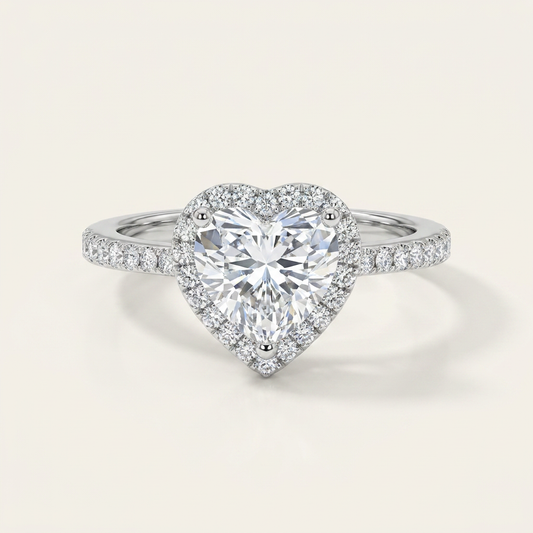
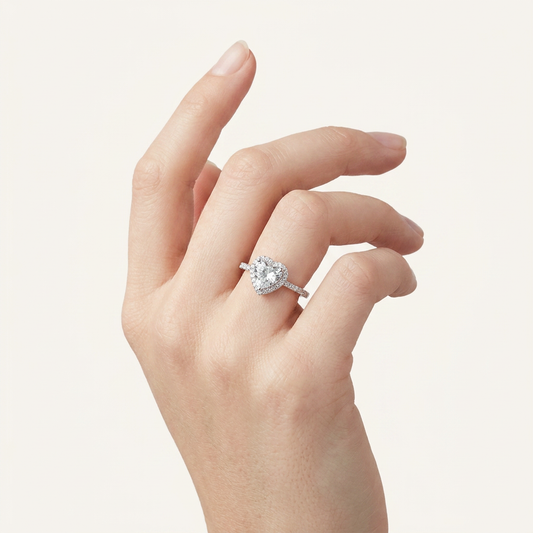


If your partner loves a little extra sparkle, a halo engagement ring might catch their eye.
This design features a center gemstone surrounded by smaller stones, creating a bright, eye-catching look.
Halo settings can also make the center stone appear larger.
They pair beautifully with simple wedding bands that let the engagement ring remain the focus.
Best for: People who love sparkle, detailed jewelry, and romantic designs.
Three-Stone Engagement Rings
2.20 CT Pear & Triangle Cut Salt and Pepper Diamond Three Stone Ring
1.50 CT Pear & Round Cut Salt and Pepper Diamond Three Stone Ring
1.75 CT Oval & Triangle Cut Salt and Pepper Diamond Three Stone Ring
1.60 CT Round & Trillion Cut Salt and Pepper Diamond Three Stone Ring


Three-stone engagement rings carry a beautiful meaning.
The three gemstones are often said to represent your past, present, and future together.
These rings usually feature a larger center stone with two smaller stones on either side.
They're a thoughtful choice for someone who loves jewelry with a personal story.
Best for: Sentimental couples and anyone who appreciates meaningful designs.
Vintage and Unique Engagement Rings
2.10 CT Oval & Round Cut Salt and Pepper Diamond Cluster Ring
1.70 CT Pear Cut Salt and Pepper Diamond Solitaire Ring (V2)
1.70 CT Kite & Round Cut Salt and Pepper Diamond Cluster Ring
1.30 CT Pear & Cushion Cut Salt and Pepper Diamond Toi Et Moi Ring


Not everyone dreams of a traditional white diamond ring.
Some people love vintage-inspired settings, unusual gemstone shapes, or stones with natural character.
Salt and pepper diamond rings are especially interesting because their visible inclusions create different patterns inside each stone.
From pear and oval shapes to kite and hexagon cuts, unique engagement rings allow you to choose something that feels truly personal.
Best for: Creative personalities, alternative bridal styles, and couples who want something different.
Popular Wedding Band Styles That Pair With Engagement Rings
Your wedding band doesn't need to compete with your engagement ring.
Sometimes, the most beautiful combination is one where both rings complement each other.
Here are a few popular wedding band styles to consider.
Classic Plain Wedding Bands
Classic Handmade Plain Wedding Band
$233
V-Shape Handcrafted Plain Wedding Band
$311
Minimalist V-Shape Plain Wedding Band
Handcrafted Plain Wedding Band
$358


A simple gold or platinum band is a timeless choice.
Its clean design works beautifully with almost any engagement ring, especially solitaire and halo styles.
Plain bands are also a practical option for people who prefer comfortable, everyday jewelry.
If your engagement ring already has plenty of sparkle, a simple wedding band can create a balanced look.
Pavé Diamond Wedding Bands
Moissanite 0.55 CT Marquise & Round Cut Wedding Band
Moissanite 0.36 CT Pear & Round Cut Wedding Band
0.42 CT Marquise & Round Cut Salt and Pepper Diamond Wedding Band
Moissanite 4.30 CT Pear Cut Solitaire Ring


Love a little extra shine?
Pavé women's wedding bands feature small diamonds or gemstones set closely together along the band.
They add sparkle without taking attention away from the engagement ring.
A pavé band can look especially beautiful beside a solitaire engagement ring, creating a combination that feels elegant without being too busy.
Curved and Contour Wedding Bands
Moissanite 1.00 CT Round Cut Wedding Band
Moissanite 0.20 CT Round Cut Wedding Band (V-Brutalist)
Moissanite 0.22 CT Round Cut Wedding Band (V-Gothic)
0.15 CT Baguette & Round Cut Salt and Pepper Diamond Wedding Band


Some engagement rings have large center stones or low settings that make it difficult for a straight wedding band to sit close.
That's where curved wedding bands come in.
These bands are shaped to follow the outline of an engagement ring, helping the two pieces fit together more naturally.
They're especially useful for pear, oval, marquise, and other settings where a straight band might leave a noticeable gap.
Eternity Wedding Bands
An eternity band features gemstones around the entire ring, creating a continuous circle of sparkle.
Many couples love the symbolism of never-ending love.
These bands look beautiful alone or alongside a simple engagement ring.
However, full eternity bands can be difficult to resize, so getting the correct ring size is particularly important.
How to Choose a Wedding Band That Matches Your Engagement Ring
Found your perfect engagement ring? Here’s how to choose a wedding band that looks beautiful with it and feels comfortable every day.
Match the Metal Color and Finish
- Matching Metals: Pair yellow, white, or rose gold rings for a classic, coordinated look.
- Mixed Metals: Combine different metal colors for a modern style, while considering everyday wear.
Choose a Band That Complements Your Engagement Ring Setting
- High-Set Rings: Straight wedding bands often fit well with high-set engagement rings.
- Low-Set Rings: Curved or custom-shaped bands may fit better around the center stone.
- Check the Fit: Make sure both rings sit comfortably without rubbing against each other.
Decide Between a Simple or Sparkling Wedding Band
- Plain Bands: Balance a large center stone or detailed halo with a simple wedding band.
- Pavé Bands: Add extra sparkle to a classic solitaire engagement ring.
- Your Style: Choose a combination that matches your personal taste.
Consider Ring Size, Comfort, and Everyday Wear
- Ring Size: Choose a secure fit that isn't too tight or loose.
- Comfort: Make sure both rings feel comfortable when worn together.
- Daily Wear: Consider a lower-profile design for an active lifestyle.
- Try Before Buying: Check how both rings look and fit together.
Moissanite vs. Lab-Grown Diamond vs. Salt and Pepper Diamond: Which Is Best for Your Ring?
Choosing the right gemstone is one of the most exciting parts of buying an engagement ring. Whether you love brilliant sparkle, a classic diamond look, or something truly unique, each gemstone offers its own beauty.
Here's a simple comparison to help you find the right one for your style and budget.
|
Feature |
Moissanite |
Lab-Grown Diamond |
Salt and Pepper Diamond |
|
Appearance |
Clear, brilliant gemstone with colorful flashes of light. |
Classic diamonds look with natural-looking brilliance. |
Unique gray, black, and white patterns created by natural inclusions. |
|
Sparkle |
Very brilliant with noticeable rainbow flashes. |
Bright, balanced sparkle similar to mined diamonds. |
Varies by cut and inclusions, often with a softer, distinctive look. |
|
Durability |
Very durable, suitable for everyday wear. |
Extremely durable, with a Mohs hardness of 10. |
Hardness of 10, but inclusions may affect durability. |
|
Price |
Generally more affordable than diamonds of a similar size. |
Usually costs less than a comparable natural diamond. |
Prices vary depending on size, cut, and stone characteristics. |
|
Popular Styles |
Solitaire, halo, oval, and three-stone rings. |
Solitaire, halo, vintage, and classic diamond rings. |
Rose-cut, kite-cut, pear-shaped, and vintage-inspired rings. |
|
Best For |
Couples who love extra sparkle at an accessible price. |
Couples who want a real diamond with more budget flexibility. |
Couples who love unique, unconventional jewelry. |
Engagement Ring vs. Wedding Ring: How Much Should You Spend?
Engagement rings usually cost more than wedding bands, but the price depends on the gemstone, metal, setting, and design you choose.
What Affects the Price of an Engagement Ring?
The center gemstone is often the biggest factor. Its size, quality, shape, and type affect the price. Natural diamonds generally cost more than comparable lab-grown diamonds or moissanite. Metal choice, setting, and customization also matter.
What Affects the Price of a Wedding Band?
Wedding bands are often more affordable because of their simpler designs. A plain gold band typically costs less than a diamond eternity band. The final price depends on the metal, band width, gemstones, and craftsmanship.
How to Set a Budget for Both Rings
There's no need to follow the old rule of spending several months' salary. Set a total budget for both rings before shopping.
As a starting point, you could spend 70% on the engagement ring and 30% on wedding bands. For example, with a $2,000 budget, that's $1,400 for the engagement ring and $600 for wedding bands.
You can adjust this split based on your preferences. If you want diamond wedding bands or matching designs, set aside more for them.
You can also explore lab-grown diamond engagement rings under $2,000 or moissanite styles to find beautiful options within your budget.
Remember, a meaningful ring doesn't have to come with a high price tag.
When Is the Best Time to Buy Engagement Rings and Wedding Bands?
Buying your rings early gives you enough time to explore designs, find the right fit, and avoid last-minute stress. Here's a simple timeline to help you plan.
Engagement Ring and Wedding Band Buying Timeline
|
When to Buy |
What to Do |
|
2–3 Months Before the Proposal |
Start exploring engagement ring styles, gemstones, prices, and ring sizes. |
|
4–6 Weeks Before the Proposal |
Finalize your engagement ring, confirm production and shipping times, and place your order. |
|
2–3 Months Before the Wedding |
Start shopping for wedding bands that match your engagement ring and fit your budget. |
|
4–6 Weeks Before the Wedding |
Finalize wedding band sizes, place orders, and allow time for adjustments. |
|
1–2 Weeks Before the Wedding |
Check both rings for fit and condition, and keep them safely stored until the big day. |
These are suggested timelines. Custom-made rings, special orders, and resizing may require additional time.
What Should You Check Before Ordering Your Rings?
Before making your final purchase, consider these important details:
- Production & Delivery: Confirm when your rings will be ready and shipped.
- Ring Size: Check the correct size and whether resizing is available.
- Returns & Warranty: Review the jeweler's return policy and warranty coverage.
- Customization: Ask whether personalized rings can be returned or resized.
Quick Tip: Order earlier if you're choosing a custom design or planning a surprise proposal. A little extra time can make your ring-shopping experience much easier.
Common Mistakes to Avoid When Buying Engagement Rings and Wedding Bands
It's easy to fall in love with a ring's appearance and forget the practical details.
Before making your purchase, watch out for these common mistakes.
1. Choosing a wedding band without checking the fit
Not every wedding band sits comfortably beside every engagement ring. Check the shape and setting before buying.
2. Guessing the ring size
A ring that's too loose or tight can become uncomfortable. Use a reliable sizing method and confirm whether resizing is possible.
3. Focusing only on gemstone size
A larger stone isn't always the better choice. Pay attention to cut, quality, setting security, and how the ring looks on the hand.
4. Forgetting the wedding band budget
If you plan to wear both rings, include both purchases in your budget from the beginning.
5. Overlooking return and resizing policies
Always review the jeweler's policies, especially when ordering custom or personalized jewelry.
Taking time to check these details can help you choose rings you'll enjoy wearing for years.
FAQs
Is a wedding ring the same as an engagement ring?
No, they're different. An engagement ring is given during a proposal, while a wedding ring is exchanged during the wedding ceremony. Both represent love but mark different milestones.
Can an engagement ring be used as a wedding ring?
Yes, absolutely. You can wear your engagement ring as your wedding ring if you prefer just one ring. It's a personal choice, and there's no rule that says you need both.
Do you wear your engagement ring and wedding band together?
Yes, many people wear both rings together after marriage, usually on the fourth finger of the left hand in the US. You can also wear them separately if that's more comfortable.
Which ring goes first, the engagement ring or wedding ring?
Traditionally, the wedding band goes first, closest to your hand, followed by the engagement ring. But you can wear them in whichever order feels right for you.
Should engagement rings and wedding bands match?
Not necessarily. Matching metals and designs create a coordinated look, but mixing styles can be just as beautiful. Choose rings that complement each other and fit comfortably.
Can you buy an engagement ring and wedding band from different jewelers?
Yes, you can buy them from different jewelers. Just make sure the metals, settings, and band shapes work well together so both rings fit comfortably.
Which is more expensive, an engagement ring or a wedding ring?
Engagement rings usually cost more because they feature a larger center gemstone. Wedding bands are often simpler and more affordable, although diamond-studded or custom bands can cost more.

Amy Rangholiya
Amy has over four years of experience at IBIZ Jewel, helping customers choose jewelry with confidence. Backed by years of jewelry training and retail experience, she shares practical advice and creates helpful, customer-focused guides.
Read More